Around 1482, Leonardo da Vinci wrote a job application to Ludovico Sforza, the man who ruled Milan. Ten numbered items. Nine of them are war machines: portable bridges, bombards, armored wagons, catapults, tunnels under the enemy's walls. Painting shows up in item ten, next to architecture and plumbing, almost as a P.S.
The most famous painter in history knew what the patron wanted to buy. He sold that, and painting rode along.
I think about that letter a lot, now that brands write to me.
The four ways to pay rent
Freedom costs money, and there are four ways to pay the rent:
- The client. Freelance and commissions. You pay with time and with someone else's brief. The work is good, and it belongs to their idea.
- The crowd. Making what the feed rewards. You pay with taste. Slowly, you start drawing for the algorithm instead of for yourself.
- The product. Commercial work, selling the thing. You pay with direction. Every piece has to convert.
- The patron. Someone backs the work and asks for their name next to it. You pay with a mention.
Of the four, the patron is the cheapest rent. It touches the art the least and leaves the most time and head space to make it. That's why I want more artists talking to companies, the giants and the mid-sized ones.
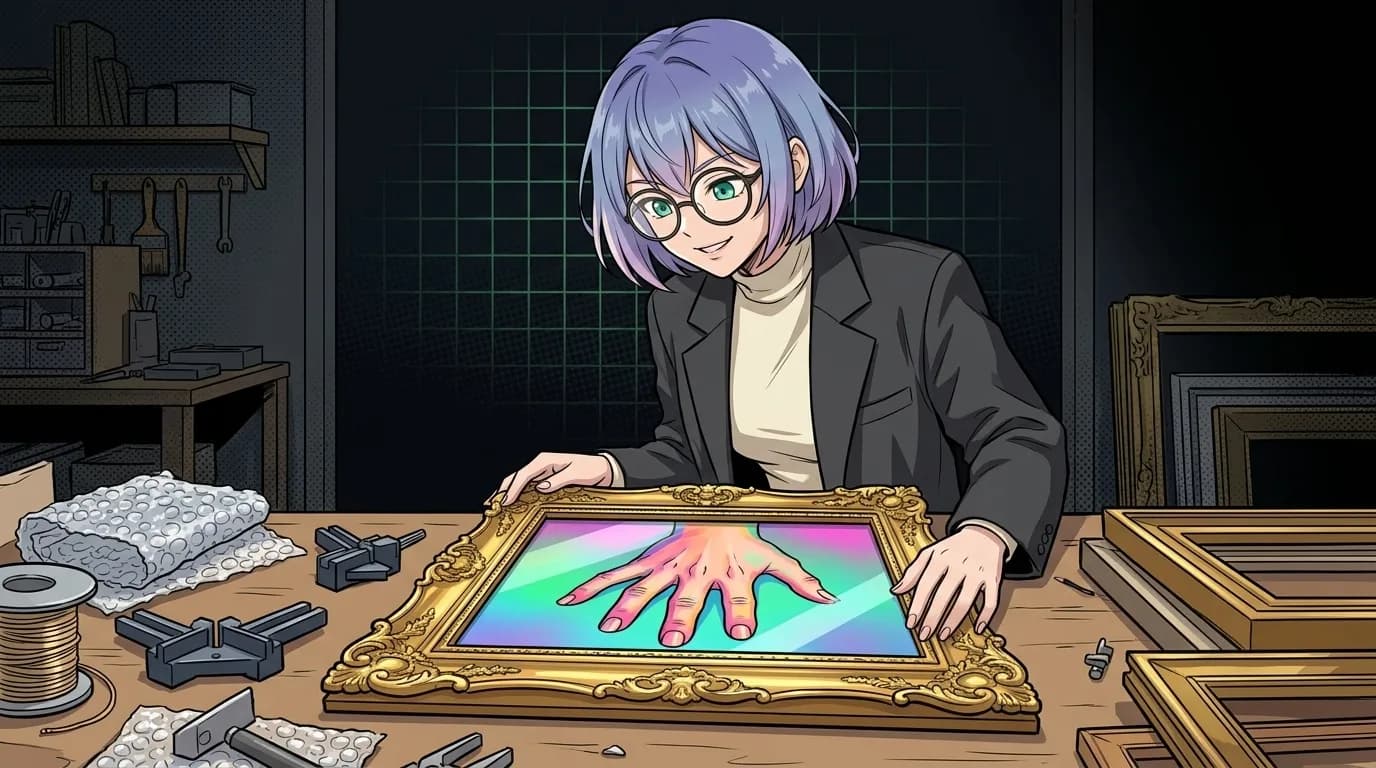
 Helen e o mestre em Milão
What a patron actually bought in 1490
Leonardo stayed at the Sforza court for about 17 years. Look at what he did with it:
- Staged La Festa del Paradiso in 1490, a revolving heaven with the planets played by actors.
- Worked on Milan's canal locks and the cathedral's tower.
- Spent years on the Gran Cavallo, a bronze horse about 7 meters tall, with a full-scale clay model in 1493.
- Painted The Last Supper.
And in between, the notebooks: flying machines, tanks, the human body. He dissected more than 30 corpses over his life. He got the bodies through hospitals, legally, and worked at night with them in the room. In Florence, a 100-year-old man died in front of him at Santa Maria Nuova, and Leonardo opened him up to understand why. That's how he described hardened arteries, centuries before medicine had a name for it.
The patron paid for a mind and got a festival, a canal, a horse and a notebook full of impossible machines. That's the deal I want: tools covered, and time to try what nobody ordered.
Where it stops
In 1494, with the French army coming, Sforza sent the 70 tons of bronze saved for the horse to Ferrara to be cast into cannons. Years of work, gone in one decision. The clay model ended up as a target for French archers. A patron can pull the plug, and you don't get a vote.
In Rome, years later, a German assistant reported Leonardo's dissections to Pope Leo X, and he lost access to the hospital.
Then came the good one. In 1516 Francis I of France brought Leonardo, already old, to Amboise. He gave him a manor, Clos Lucé, a pension and the title First Painter, Engineer and Architect to the King. Leonardo's right hand was failing. He painted little. The king mostly wanted him around to think out loud.
He arrived carrying the Mona Lisa. A Florentine merchant had commissioned it around 1503 as a portrait of his wife. Leonardo never delivered it. He kept painting it for himself, for over a decade.
The patrons today are companies
Today's Medici are compute companies and AI platforms. A good deal looks a lot like the old one: they give the tools, I write my own prompts, and their name goes next to the work I choose to show.
At the base, the infrastructure that backs builders on their stack:
On top, the creative tools:
These are some of my modern patrons. They give me infrastructure, plus invites, discounts and the like. On some of these links I try to keep the current invite or promo up to date, and those change, so grab it while you can.
This article is part of that deal. Some links are affiliate links: you pay the same, or less with the code, and a cut comes back to the studio.
Code for OpenArt
One take, four prices
BF2026 takes 20% off OpenArt monthly plans until November 30.
Talk to them
If you make things, learn to talk to companies. They have the tools. Ask for support that leaves the work free.
What would you make if a patron covered the tools for a year?